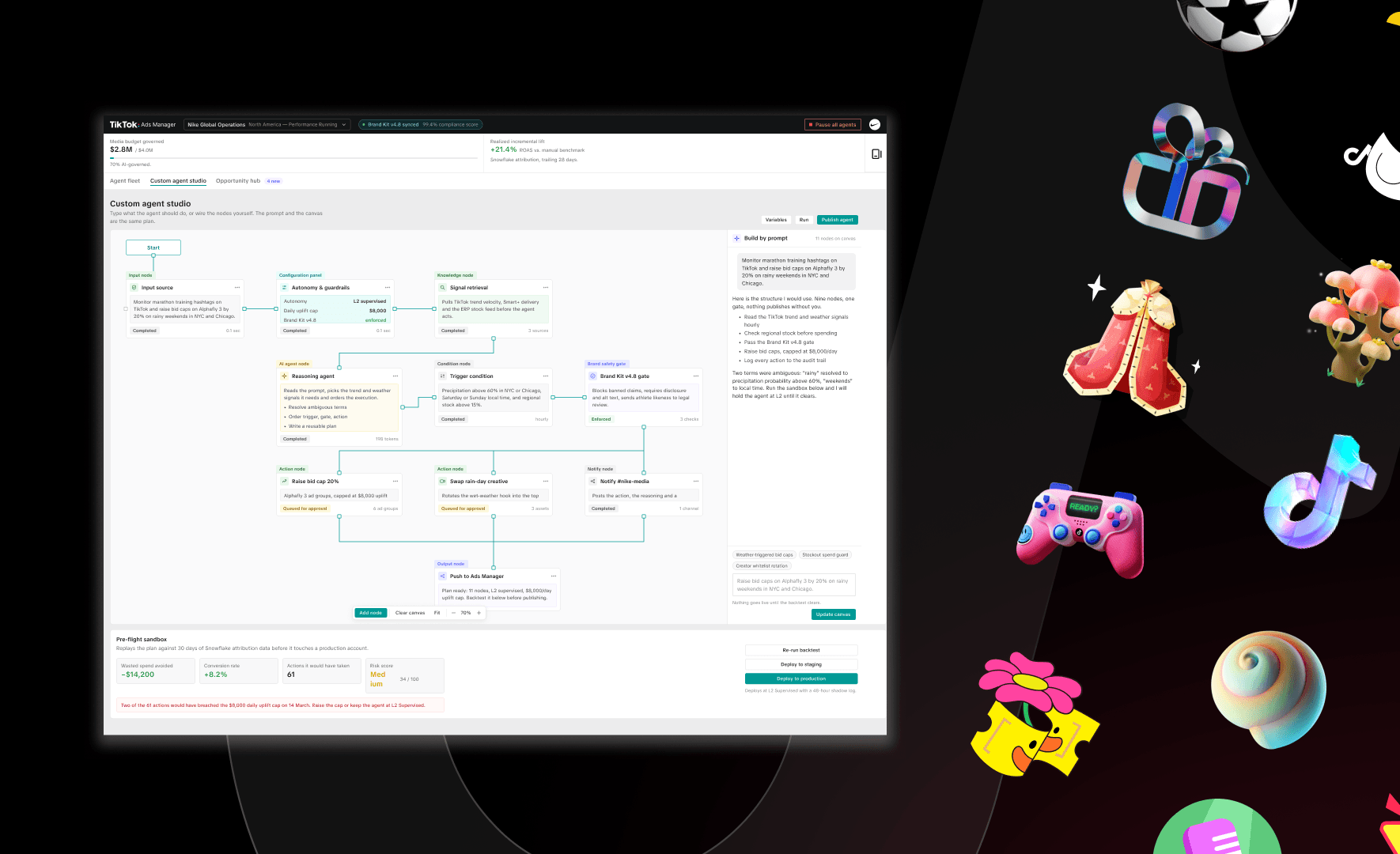
Campaign Hero — open on a desktop browser to use the live prototype.
Reimagining Campaign Creation
An agentic approach to ad strategy — shifting the enterprise ad-tech paradigm from manual campaign setup to goal-driven, AI-orchestrated strategy.
Ads ManagerThe TL;DRI led the 0 → 1 design of an Agentic Campaign Builder — a multi-agent ecosystem that ingests an advertiser’s business goals, past ad performance, and brand guidelines to autonomously draft, structure, and recommend complete, ready-to-launch ad campaigns with human-in-the-loop approval.
The Campaign Creation Bottleneck
For enterprise advertisers, launching a new campaign is incredibly manual and fragmented. Marketers spend hours digging through past performance data, building out complex targeting structures, and aligning creative assets with specific business goals. While “black box” AI promises to simplify this, enterprise brands reject it because it often lacks strategic nuance and ignores the unique context of their business.
The ChallengeHow might we design an AI-native workspace that acts as a strategic co-pilot — capable of analyzing past ad runs and business goals to generate complete, high-quality campaign structures, while keeping the marketer in the driver’s seat?
Designing for “Supervised Autonomy”
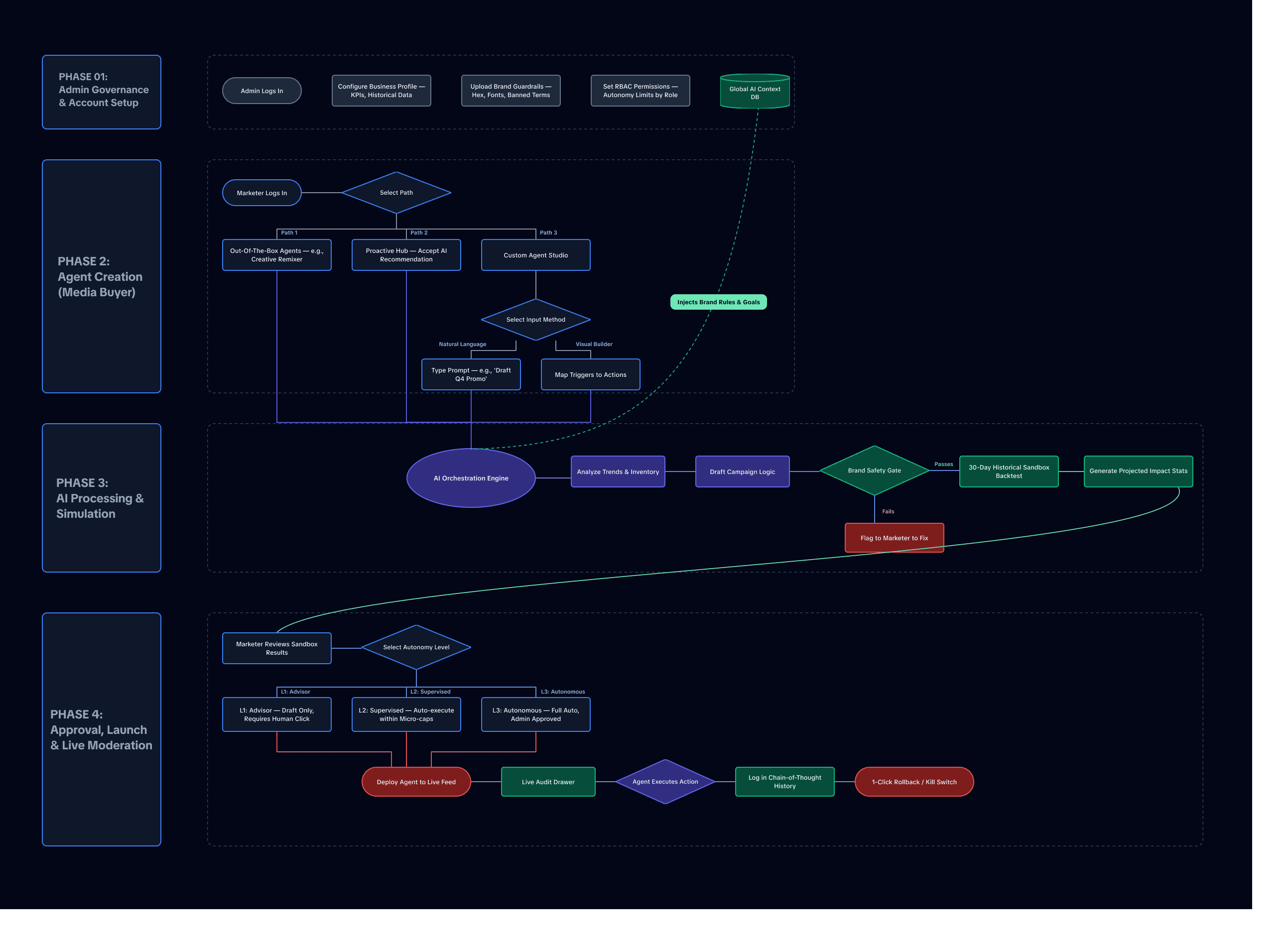
We needed to fundamentally change the marketer’s mental model from Form-Filler to Strategy Orchestrator. Instead of assembling a campaign field by field, the marketer states an objective and reviews the structure an agent proposes against it. I organised the platform around three core pillars.
Out-of-the-Box Campaign Agents
Pre-configured agents — Product Launch Architect, Seasonal Promo Strategist — that instantly draft complete campaigns from platform best practices, so a marketer starts from a structured blueprint instead of an empty form.
Custom Agent Studio
A visual node-based builder that lets teams wire their own data sources — last year’s Q4 performance, a brand kit, an inventory feed — into the logic that dictates how new campaigns get generated.
Proactive Recommendation Hub
An insights engine that anticipates business needs rather than waiting to be asked, pitching fully drafted campaigns that sit ready for a human decision.
Two Iterations, One Hard Lesson
Iteration 1
The “Chatbot” Trap
Our initial explorations relied heavily on conversational UI — a floating AI assistant marketers could chat with to build a campaign. The learning: marketers don’t want to chat, they want to review and execute. The cognitive load of typing complex prompt parameters for a campaign structure was too high, and the lack of visual feedback felt risky.
Iteration 2
Actionable Ergonomics
In V2 and V3 I pivoted the design language, stripping away the chat logs and replacing them with actionable, component-driven UI. Two decisions carried the shift.
Tiered Autonomy
Rather than auto-publishing campaigns, agents act as drafting assistants. They build the ad groups, audiences and creative pairings — but a human clicks “Approve & Launch.” Autonomy became a level the advertiser raises deliberately, not a default they inherit.
The Chain-of-Thought Drawer
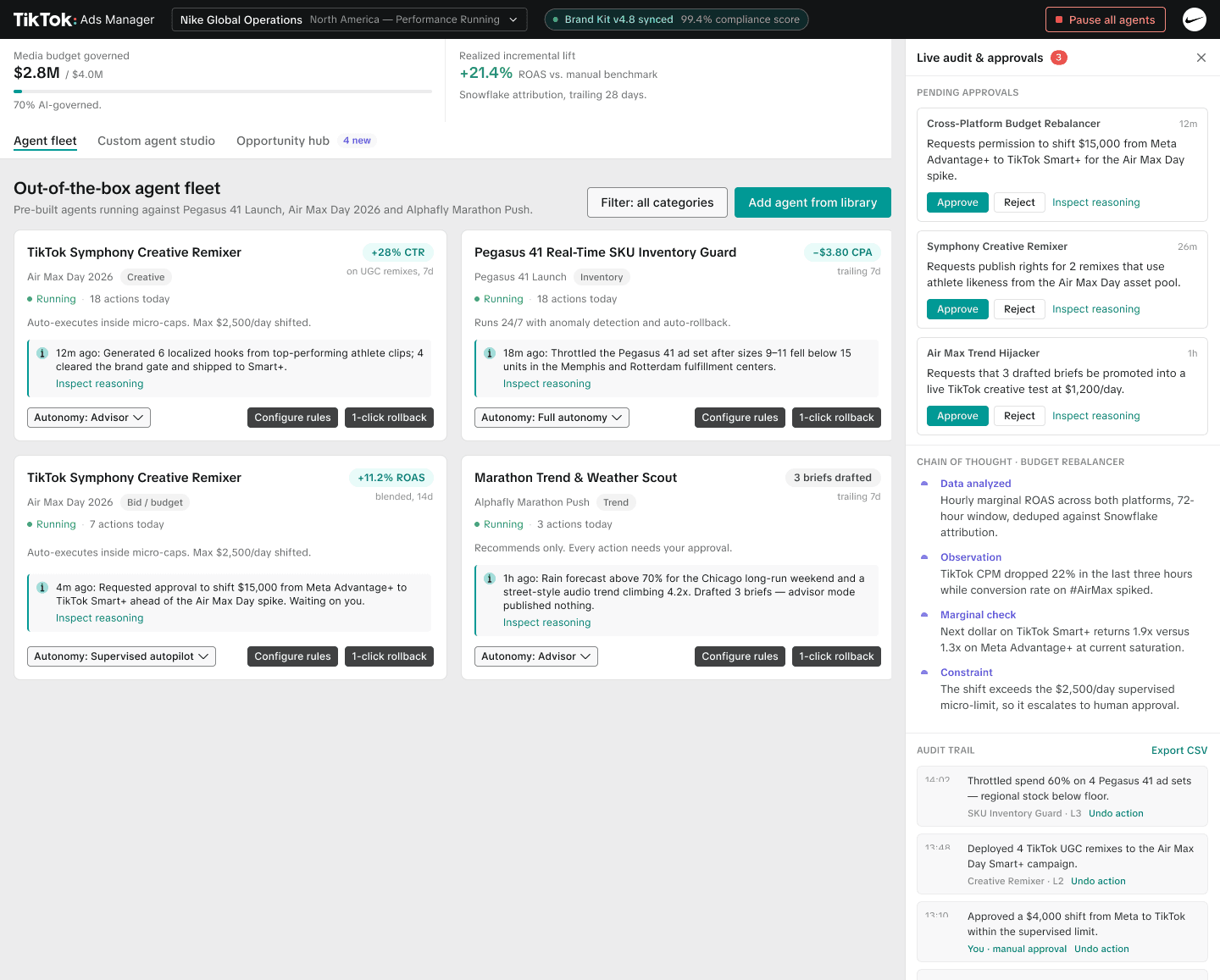
An expandable audit log. Whenever an agent generates a campaign it produces a plain-English decision tree explaining the why: “Analyzed your 2025 Summer Sale → found vertical UGC videos yielded 15% higher CTR → prioritized vertical video assets in this draft.”
Every Phase, Side by Side
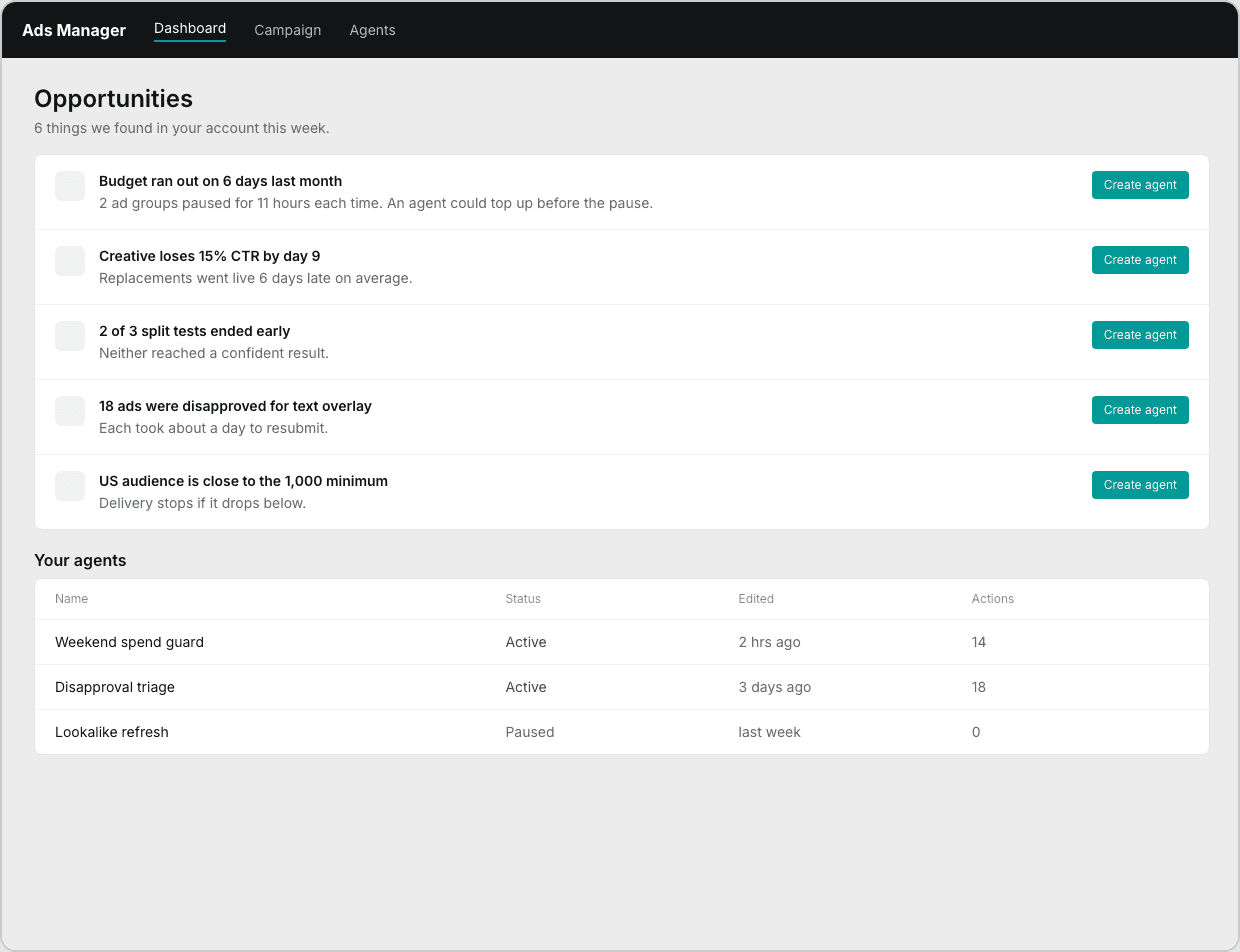
The three screens that carried the product — the dashboard, the agent detail and the builder — each went through three phases. The frames below are live: pan across the low-fidelity starts, the mid-fidelity pivots and what finally shipped, with the reasoning for every kill and every keep written next to the frame it belongs to.
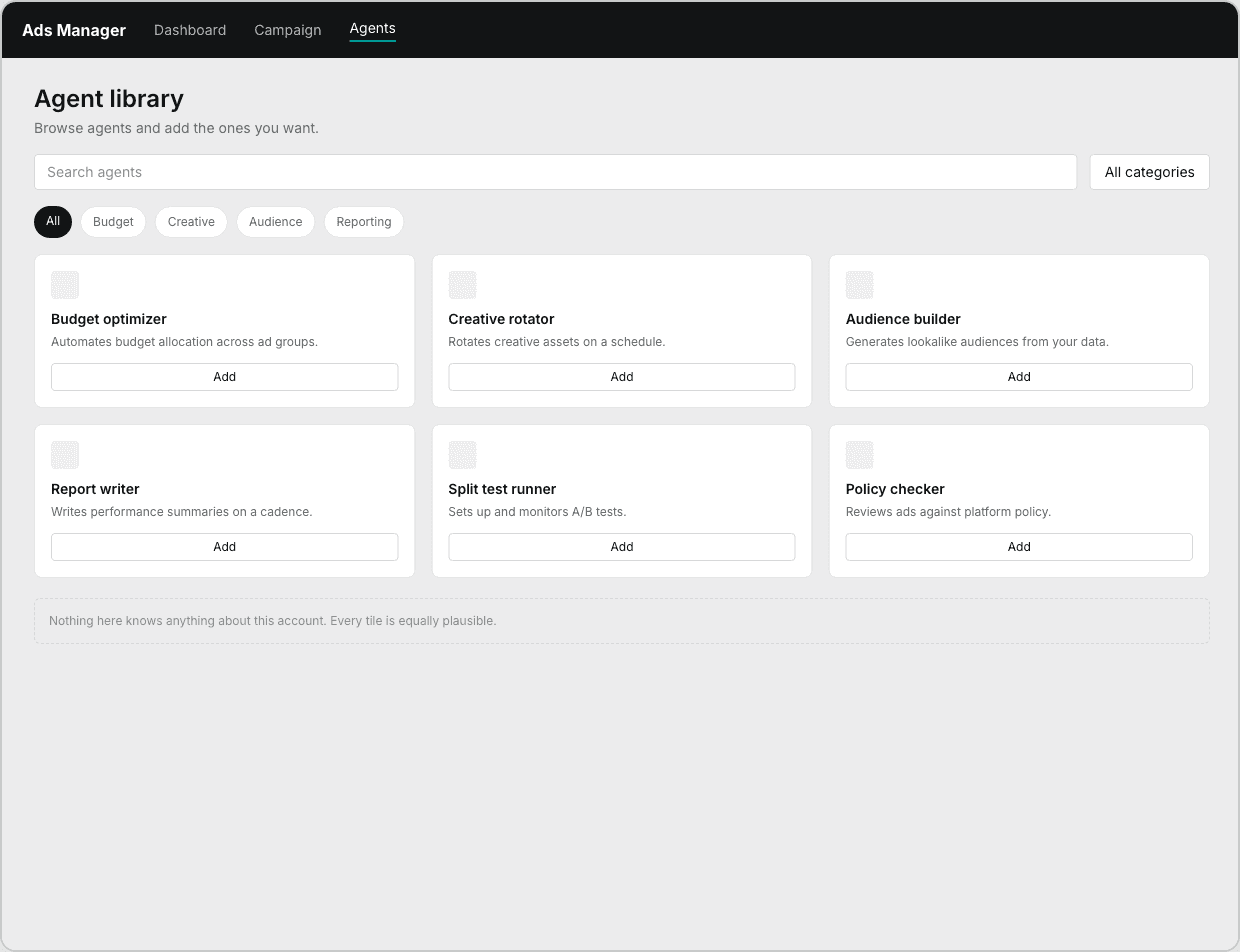
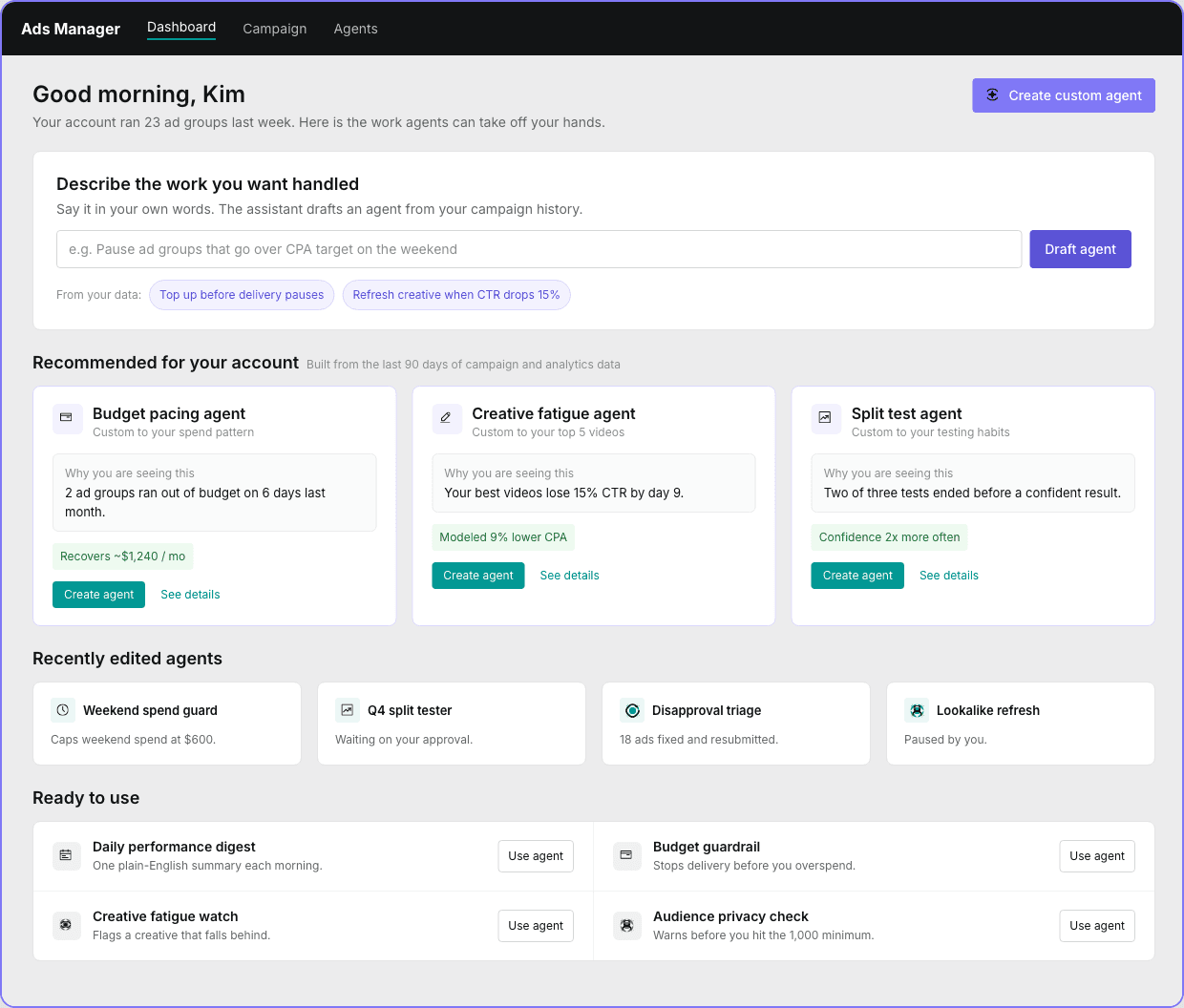
A · The Agent Dashboard
The dashboard acts as a strategic command center. Key metrics prioritise campaign readiness and goal alignment over raw delivery stats. Each agent card reports its most recent work in plain language — “read the Alphafly 4 brief, benchmarked it against 14 past Nike running launches and drafted a 3-stage campaign — tease, launch, retarget — with budgets and audiences filled in.” A marketer scans what has been drafted in the background and sees, at a glance, what is waiting on their decision.
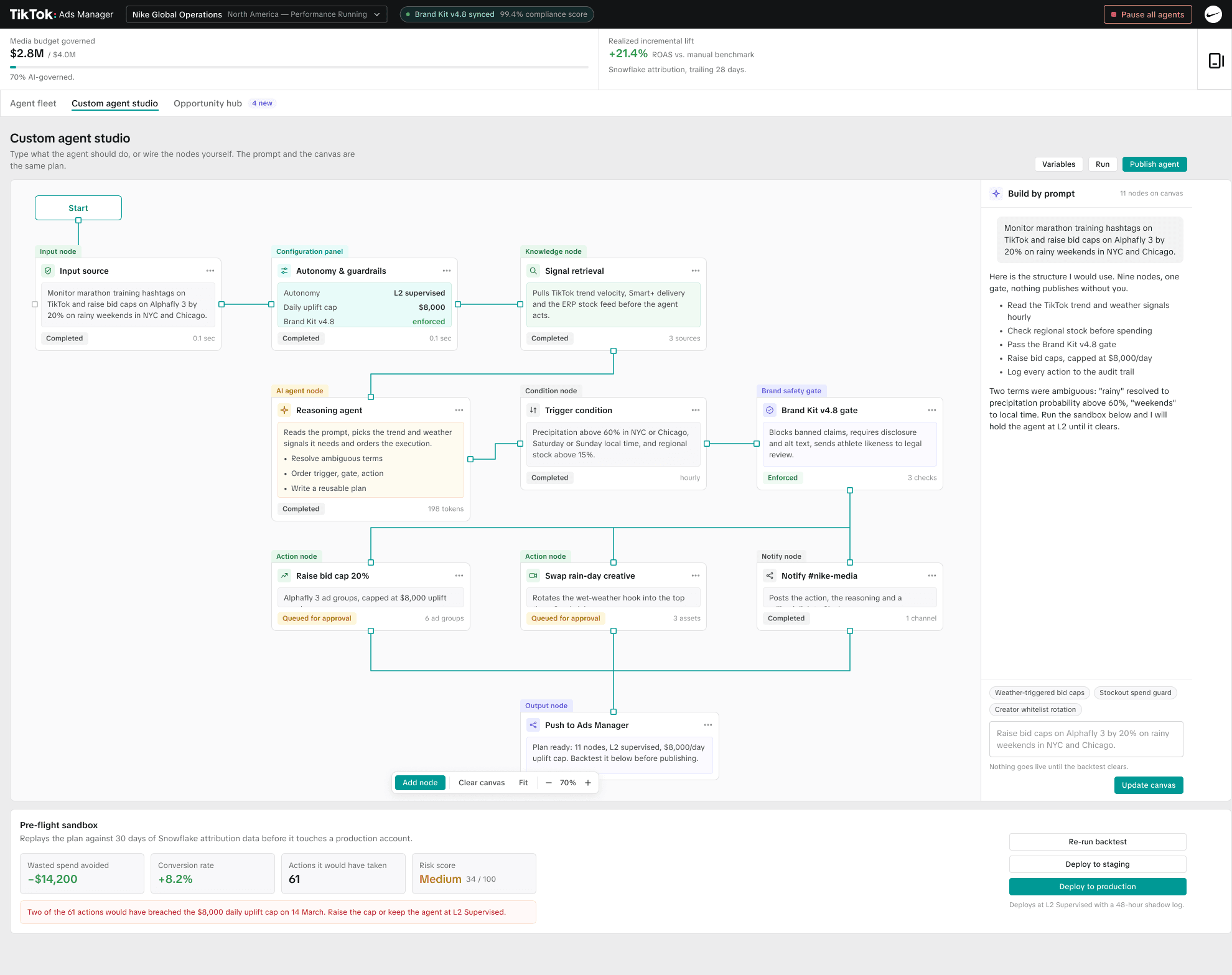
B · Custom Agent Node Builder
Enterprise brands have unique strategies, so the builder is dual-mode: a natural language input for quick drafting that translates seamlessly into a visual node graph. Marketers map their own logic — Trigger (upcoming holiday) → Context (ingest last year’s top performers) → Action (draft campaign structure). The prompt and the canvas write to the same plan, so neither mode is the lesser one.
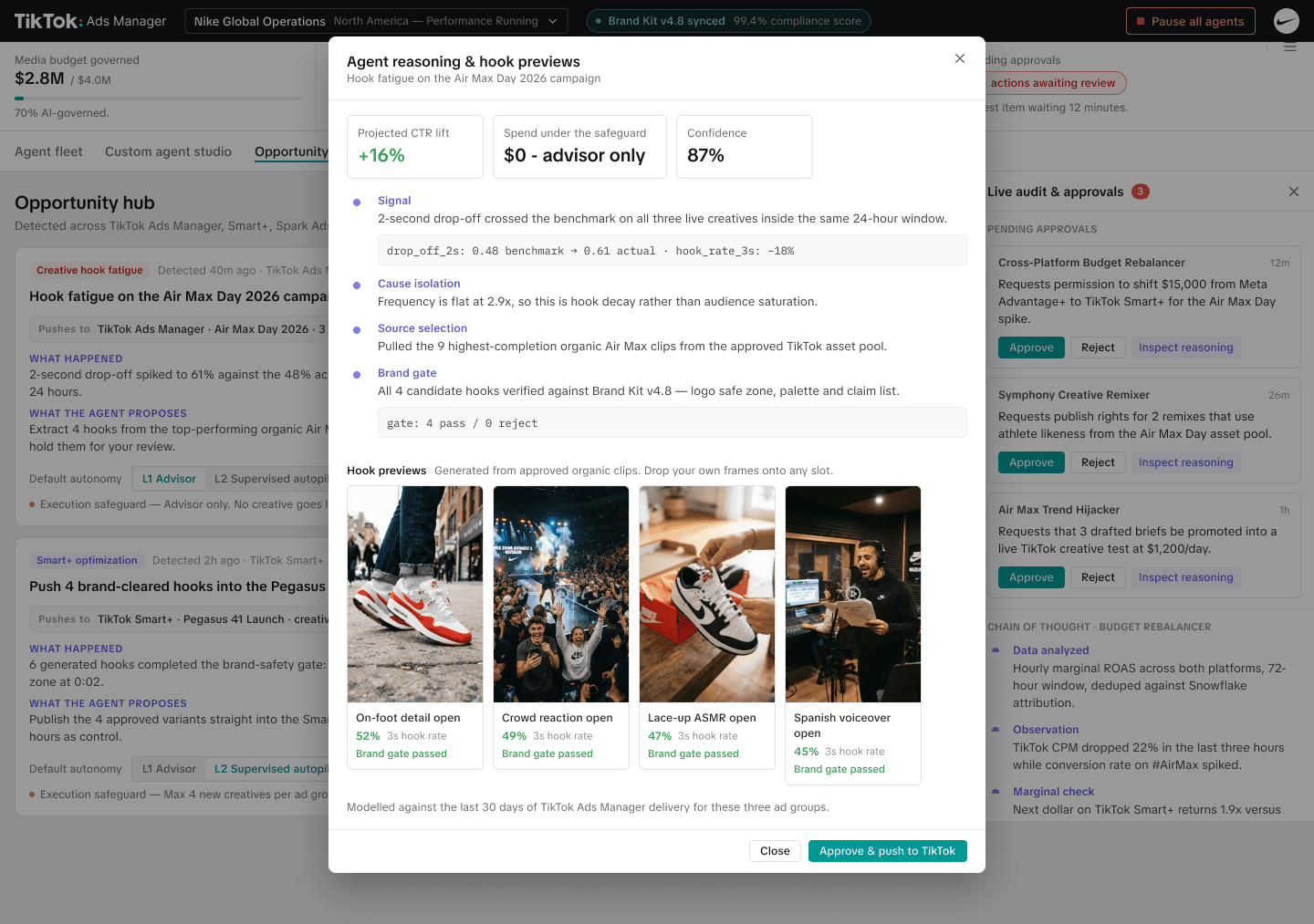
C · Goal & Brand Alignment Engine
To address enterprise anxiety I integrated a persistent brand & goal alignment badge. Before an agent presents a drafted campaign, the system verifies that targeting, budget distribution and creative pairings match the advertiser’s stated business goals and ingested brand safety guidelines. Every candidate asset passes the brand gate — logo safe zones, palette, banned claims — and the result is shown as evidence, not as a reassurance.
Final Walkthrough
Here is a final product walkthrough of the agentic AI agents experience for ads manager campaign creation.
Final product walkthrough.
Trust is the UI
The biggest takeaway from this 0 → 1 project was that in enterprise AI, trust is your primary metric. By surfacing the AI’s chain-of-thought reasoning, letting marketers strictly define their business goals, and framing the agent as a high-powered drafting assistant rather than an autonomous buyer, we turned a daunting “AI takeover” into a collaborative, empowering superpower for campaign strategy.
That framing is also why the numbers below are backtested rather than promised. Every plan replays against 30 days of real attribution data before it is allowed near a production account — the advertiser sees what an agent would have done, and what it would have cost, before granting it any autonomy at all.